
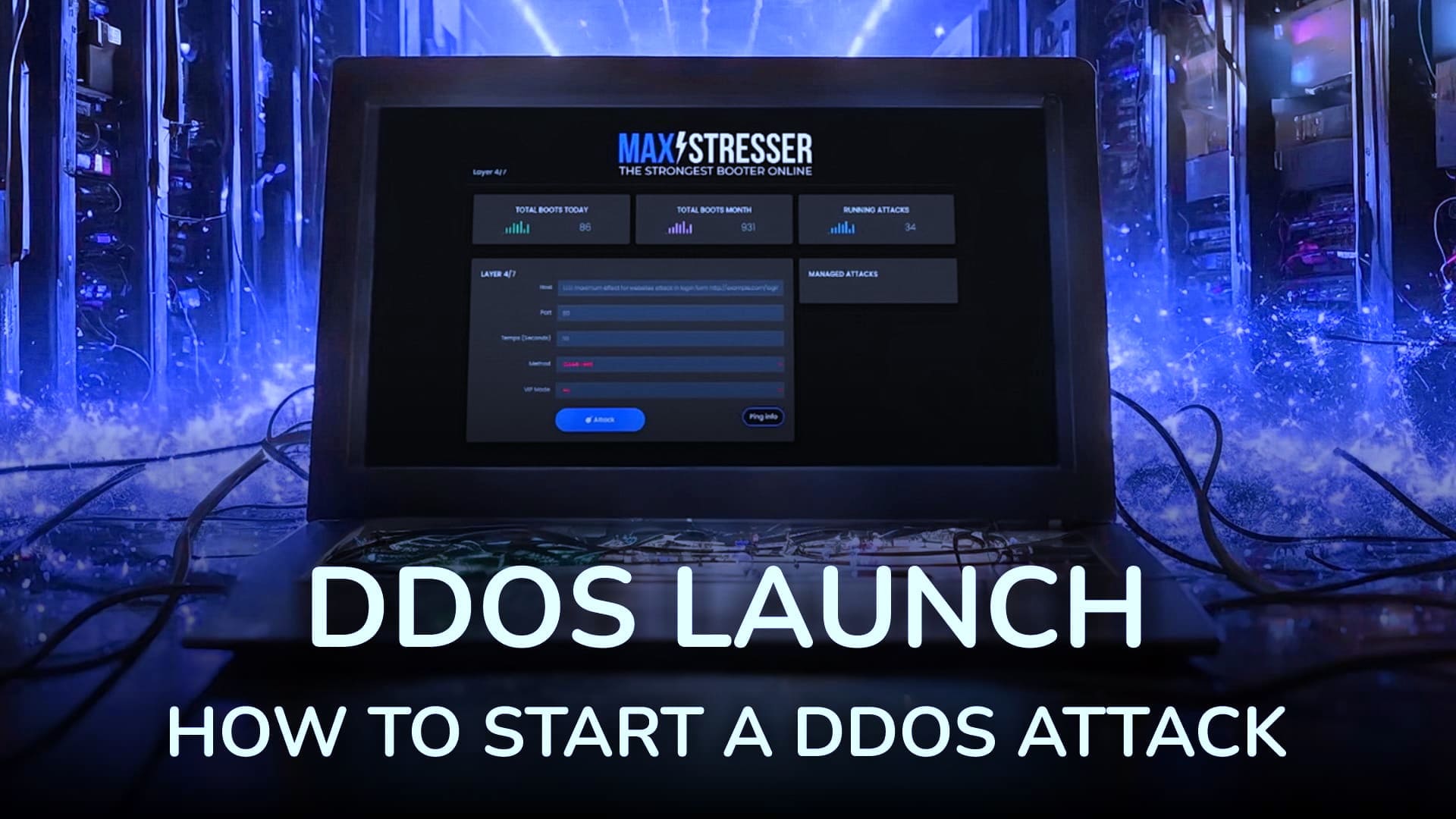
An IP stresser is a tool made to evaluate a network or web server for toughness. The administrator might run a cardiovascular test in order to identify whether the existing sources (bandwidth, CPU, etc) suffice to manage additional load.
Examining one’s own network or web server is a legit use a stresser. Running it against someone else’s network or web server, causing denial-of-service to their legit users, is illegal in the majority of countries.
What are booter solutions?
Booters, also referred to as booter services, are on-demand DDoS (Distributed-Denial-of-Service) attack solutions offered by resourceful lawbreakers in order to reduce sites and networks. To put it simply, booters are the invalid use of IP stressers.
Prohibited IP stressers usually obscure the identity of the attacking web server by utilize of proxy servers. The proxy reroutes the attacker’s link while concealing the IP address of the assailant.
Booters are slickly packaged as SaaS (Software-as-a-Service), commonly with e-mail assistance and YouTube tutorials. Packages may offer a single solution, multiple attacks within a defined period, or even lifetime gain access to. A standard, one-month package can set you back as little as $19.99. Settlement alternatives might consist of credit cards, Skrill, PayPal or Bitcoin (though PayPal will cancel accounts if harmful intent can be proved).
Exactly how are IP booters various from botnets?
A botnet is a network of computers whose owners are not aware that their computer systems have been contaminated with malware and are being utilized in Web attacks. Booters are DDoS-for-hire solutions.
Booters typically utilized botnets to launch attacks, but as they obtain extra innovative, they are taking pride in even more powerful web servers to, as some booter solutions placed it, assist you release your assault.by link stresser website
What are the inspirations behind denial-of-service strikes?
The inspirations behind denial-of-service attacks are lots of: skiddies * expanding their hacking abilities, organization competitions, ideological problems, government-sponsored terrorism, or extortion. PayPal and credit cards are the recommended methods of repayment for extortion strikes. Bitcoin is likewise being used is since it provides the capability to camouflage identification. One drawback of Bitcoin, from the attackers’ perspective, is that less people make use of bitcoins compared to other forms of payment.
* Script kid, or skiddie, is a demeaning term for fairly low-skilled Internet mischief-makers that utilize scripts or programs composed by others in order to launch assaults on networks or internet sites. They go after fairly well-known and easy-to-exploit safety and security susceptabilities, often without considering the effects.
What are amplification and reflection strikes?
Reflection and boosting attacks utilize genuine traffic in order to overwhelm the network or web server being targeted.
When an attacker creates the IP address of the sufferer and sends a message to a third party while making believe to be the victim, it is referred to as IP address spoofing. The third party has no chance of distinguishing the target’s IP address from that of the assailant. It replies directly to the sufferer. The opponent’s IP address is concealed from both the victim and the third-party server. This procedure is called reflection.
This belongs to the aggressor getting pizzas to the target’s house while claiming to be the sufferer. Now the sufferer winds up owing money to the pizza place for a pizza they really did not order.
Web traffic boosting happens when the aggressor forces the third-party server to return actions to the target with as much data as feasible. The proportion between the sizes of action and demand is referred to as the boosting aspect. The greater this boosting, the higher the prospective interruption to the target. The third-party server is also interrupted because of the quantity of spoofed demands it needs to process. NTP Boosting is one instance of such an attack.
One of the most reliable sorts of booter assaults utilize both boosting and reflection. First, the assailant forges the target’s address and sends a message to a third party. When the third party replies, the message mosts likely to the fabricated address of target. The reply is much larger than the original message, consequently intensifying the size of the strike.
The duty of a single robot in such an assault is akin to that of a malicious teenager calling a restaurant and ordering the entire menu, then asking for a callback confirming every thing on the menu. Other than, the callback number is that of the victim’s. This leads to the targeted victim receiving a call from the restaurant with a flood of information they didn’t demand.
What are the groups of denial-of-service assaults?
Application Layer Attacks pursue internet applications, and frequently make use of the most class. These assaults exploit a weak point in the Layer 7 method pile by first establishing a link with the target, then tiring web server resources by taking over processes and transactions. These are tough to determine and minimize. A typical instance is a HTTP Flood attack.
Procedure Based Assaults concentrate on making use of a weakness in Layers 3 or 4 of the procedure stack. Such assaults eat all the processing ability of the sufferer or other critical sources (a firewall program, as an example), causing solution disturbance. Syn Flooding and Sound of Fatality are some examples.
Volumetric Attacks send out high quantities of traffic in an initiative to fill a target’s transmission capacity. Volumetric assaults are simple to create by utilizing straightforward amplification strategies, so these are one of the most usual kinds of assault. UDP Flood, TCP Flood, NTP Amplification and DNS Boosting are some examples.
What prevail denial-of-service strikes?
The goal of DoS or DDoS assaults is to consume enough server or network sources to ensure that the system comes to be less competent to genuine requests:
- SYN Flood: A sequence of SYN requests is guided to the target’s system in an attempt to overwhelm it. This attack exploits weak points in the TCP link series, referred to as a three-way handshake.
- HTTP Flood: A type of strike in which HTTP GET or POST demands are made use of to strike the internet server.
- UDP Flooding: A kind of assault in which random ports on the target are overwhelmed by IP packets consisting of UDP datagrams.
- Ping of Death: Attacks include the purposeful sending of IP packets larger than those allowed by the IP procedure. TCP/IP fragmentation take care of huge packages by breaking them down into smaller IP packets. If the packages, when assembled, are larger than the allowed 65,536 bytes, heritage web servers typically crash. This has actually mainly been taken care of in more recent systems. Ping flood is the contemporary version of this assault.
- ICMP Protocol Attacks: Strikes on the ICMP method take advantage of the reality that each request calls for handling by the web server before an action is returned. Smurf attack, ICMP flooding, and ping flood make the most of this by inundating the web server with ICMP demands without waiting on the feedback.
- Slowloris: Created by Robert ‘RSnake’ Hansen, this assault tries to keep multiple connections to the target web server open, and for as long as possible. At some point, added connection attempts from clients will certainly be denied.
- DNS Flooding: The opponent floods a certain domain name’s DNS servers in an effort to interrupt DNS resolution for that domain name
- Teardrop Attack: The attack that entails sending fragmented packages to the targeted device. A bug in the TCP/IP procedure stops the web server from reassembling such packages, causing the packets to overlap. The targeted tool collisions.
- DNS Boosting: This reflection-based attack turns legit requests to DNS (domain system) servers right into much bigger ones, in the process eating web server sources.
- NTP Boosting: A reflection-based volumetric DDoS assault in which an opponent makes use of a Network Time Protocol (NTP) server capability in order to overwhelm a targeted network or web server with an intensified quantity of UDP website traffic.
- SNMP Reflection: The enemy creates the sufferer’s IP address and blasts numerous Simple Network Monitoring Protocol (SNMP) demands to devices. The quantity of replies can bewilder the sufferer.
- SSDP: An SSDP (Simple Service Exploration Method) assault is a reflection-based DDoS strike that exploits Universal Plug and Play (UPnP) networking protocols in order to send an enhanced amount of website traffic to a targeted victim.
- Smurf Assault: This strike makes use of a malware program called smurf. Lots of Internet Control Message Procedure (ICMP) packages with the victim’s spoofed IP address are broadcast to a computer network making use of an IP program address.
- Fraggle Attack: An assault similar to smurf, other than it uses UDP instead of ICMP.
What should be done in instance of a DDoS extortion attack?
- The data facility and ISP should be instantly informed
- Ransom money settlement must never be an alternative — a settlement typically causes intensifying ransom needs
- Police need to be notified
- Network website traffic must be monitored
- Connect to DDoS defense strategies, such as Cloudflare’s free-of-charge strategy
How can botnet attacks be alleviated?
- Firewall softwares need to be set up on the server
- Safety and security spots need to depend on date
- Antivirus software application have to be run on timetable
- System logs should be regularly kept an eye on
- Unidentified e-mail servers ought to not be permitted to disperse SMTP traffic
Why are booter services tough to map?
The individual getting these criminal services makes use of a frontend website for settlement, and guidelines associating with the strike. Extremely often there is no recognizable connection to the backend starting the actual assault. Therefore, criminal intent can be tough to verify. Following the settlement route is one means to locate criminal entities.
Добавить комментарий